You finish your shopping, glance at the receipt and see an invitation to tell Sobeys about your visit. A few minutes later you’ve rated the store, left a comment and entered a draw for Sobeys gift cards. Nobody made you do it. So why do so many shoppers bother?
The answer has less to do with the prize than most people think. This post looks at how the survey actually works and the everyday psychology that gets people to take part.
What Is the Sobeys Survey?
The Sobeys survey is the grocer’s customer feedback program. It starts at www.sobeys.com/mysobeys, which forwards to Sobeys’ survey page. You choose English or French, pick your province, enter details from your receipt and answer questions about your visit. Many of the questions are ratings on a 0 to 10 scale.
There’s no instant coupon or validation code at the end. Instead, completing the survey and giving your contact details enters you into a contest. For the 2026 contest, published listings describe prizes of $500 in Sobeys gift cards, picked by random draw after the contest closes. The details of the prize are on our Sobeys survey reward page.
That difference matters. People take the survey even though most of them won’t win anything. The reasons are below.
Why Does Being Asked for Your Opinion Feel Good?
Most people like being asked what they think. A survey invitation on a receipt is a small signal that the store wants to hear from you, not just take your money.
Psychologists call this “voice.” When people get a chance to say how something went, they tend to feel more respected, even if they can’t see what happens to their answers. A shopper who waited 20 minutes at the deli counter, or who got great help finding an item, now has a place to say so.
That’s also why the comment box is often the part people care about most. Ratings are quick, but a few sentences about what actually happened is where the real feedback lives.
Why Does a Small Chance to Win Still Work?
A prize draw is uncertain. You might win; you probably won’t. You’d expect that to put people off, but it often does the opposite.
Uncertain rewards have a pull of their own. It’s the same reason lottery tickets and “spin to win” promotions are popular. The prize is large compared with the effort, and the cost of entering is a few minutes of your time. For many shoppers, that trade feels worth it.
It helps to be realistic, though. The 2026 contest listings mention a limit of 12 entries per person and a small number of prizes. The draw is a nice bonus, not a reason to shop.
How Does Reciprocity Come Into It?
Reciprocity is the instinct to give something back when someone gives you something. Sobeys offers a chance at a prize; you give a few minutes of feedback in return.
It also runs the other way. Shoppers who have had good service often take the survey to thank a specific employee or department. Shoppers who had a bad visit take it because they want the store to fix something. Either way, the survey is a fair exchange rather than a chore.
Why Does Low Effort Matter So Much?
People are far more likely to do something when it’s easy. The Sobeys survey keeps the effort low in a few ways:
- The details you need are printed on your receipt: the store number, the transaction (TRANS) number and the date.
- It runs in a web browser, so it works on a phone.
- Many questions are a single tap on a 0 to 10 scale.
- A progress bar shows how far along you are, so you know it will end soon.
Each of those removes a reason to quit halfway. The progress bar is a good example: when people can see they’re nearly done, they’re more likely to finish.
Does Timing Make a Difference?
Yes. Your memory of a shopping trip is sharpest in the first day or two. That’s when you remember the friendly cashier, the empty shelf or the long line. Surveys that ask while the visit is fresh get better, more specific answers.
There’s a practical side too. Contest walkthroughs say the store list in the survey covers stores you visited within about the past week, so an old receipt may not work. Taking the survey soon after you shop is both easier and more useful.
How Do These Reasons Work Together?
| Reason | What it does for the shopper |
|---|---|
| Being asked for an opinion | Makes you feel heard |
| Chance to win | Adds a small, exciting bonus |
| Reciprocity | Makes giving feedback feel fair |
| Low effort | Removes reasons to stop |
| Good timing | Makes the visit easy to remember |
No single reason explains it. A shopper might start because of the prize, keep going because it’s easy, and finish with a comment because the visit really was good or bad.
How Can You Get the Most Out of the Sobeys Survey?
- Take it within a few days. Keep the receipt flat and away from heat so the numbers don’t fade.
- Be specific. Mention the department, the time of day and what happened. That’s the feedback a store manager can act on.
- Finish the contest step. Enter your name and contact details and accept the rules, or your answers count as feedback only.
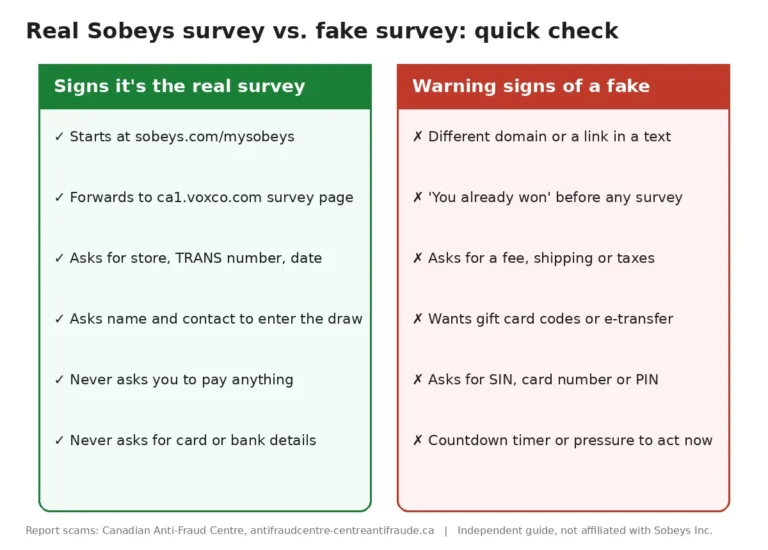
- Use only the real survey. Start at www.sobeys.com/mysobeys yourself. Never pay a fee or share card details to “claim” a prize.
If something isn’t clear, our Sobeys survey FAQs answer the common questions about entries, limits and the draw.